
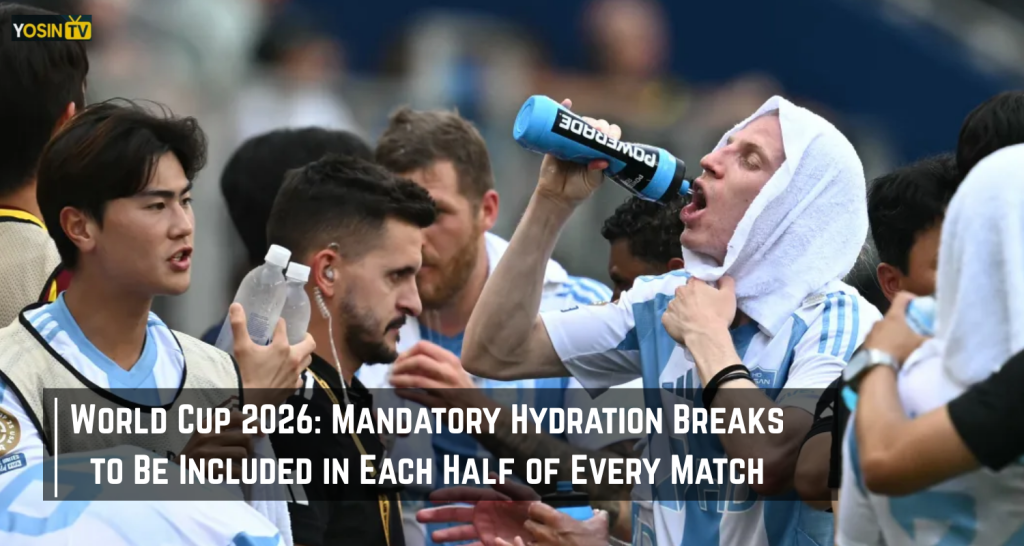
The World Cup 2026 will bring a major change to match regulations, with FIFA confirming the introduction of mandatory hydration breaks in both halves of every game. This decision comes as part of a wider effort to protect player welfare during a tournament expected to face extreme heat conditions across the United States, Mexico and Canada. The new regulation marks a streamlined and simplified approach, replacing older heat-threshold systems with a universal, predictable rule for all participating teams.
FIFA has confirmed that referees will stop play exactly 22 minutes into each half to allow players to rehydrate. These hydration breaks will last a full three minutes and will take place regardless of weather conditions, stadium location, or whether the venue has a roof or air conditioning. This means that every match in the World Cup 2026 will include two mandatory hydration stops: one in the first half and one in the second.
The governing body said this uniform rule ensures fairness and consistency across all matches. Previously, cooling breaks were only implemented when the temperature exceeded a specific threshold, usually around 31–32°C. However, irregular weather patterns and rising global temperatures have heightened concerns, prompting FIFA to move toward a more predictable and safer system.
Manolo Zubiria, the Chief Tournament Officer for the World Cup 2026, explained that hydration breaks will occur in every match without exception. He added that if a stoppage—such as an injury—occurs close to the 22-minute mark, referees will apply flexibility and adjust the break accordingly.
Extreme Heat Concerns Influence New Measures
The introduction of these mandatory hydration breaks comes amid increasing concerns surrounding heat stress. The World Cup 2026 is scheduled for June and July, months known for high temperatures across North America. A recent report titled Pitches in Peril highlighted that 10 out of 16 venues hosting matches during the World Cup 2026 are at a very high risk of extreme heat stress.
These findings align with observations from this year’s FIFA Club World Cup, also held in the United States. Multiple players reported dizziness, fatigue, and discomfort due to high temperatures during mid-day kick-offs. Chelsea midfielder Enzo Fernández spoke openly about feeling “dizzy” in what he described as “very dangerous” heat.
Managers have voiced concerns, too. England manager Thomas Tuchel suggested that during the World Cup 2026, he might consider keeping substitutes inside the dressing rooms until the last moment to minimize exposure to extreme heat. The hydration-break initiative is part of FIFA’s strategy to respond to these escalating safety issues and ensure player performance and health are protected.
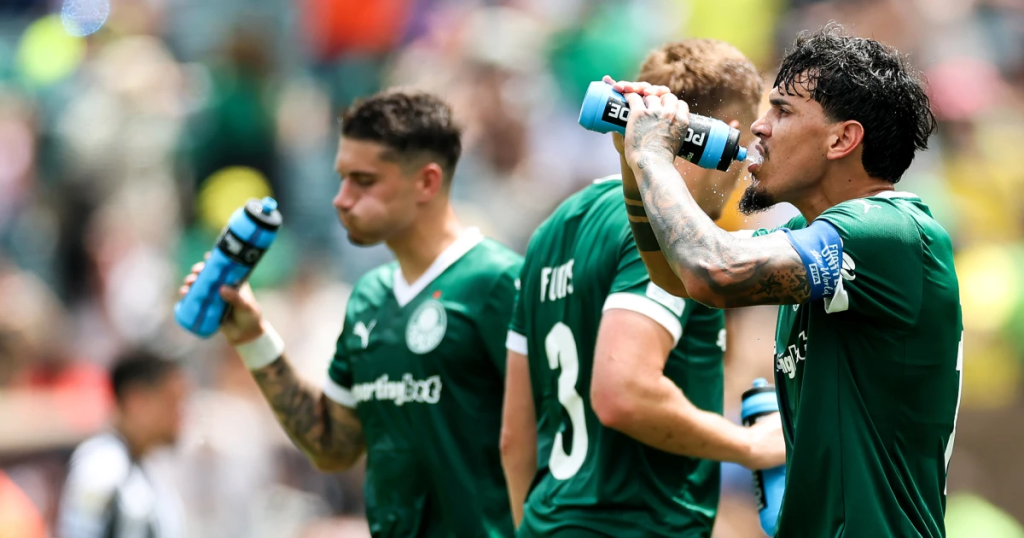
FIFA emphasized that the new hydration rules will support consistent conditions and help players perform at their best. High temperatures, humidity, and even the risk of wildfires and hurricanes could greatly affect the World Cup 2026 environment. The addition of hydration breaks may also benefit broadcasters by providing structured, predictable stoppages within the matches.
The World Cup 2026 is expected to be the largest edition in history, involving 48 teams and an extensive travel schedule across North America. Given the size of the tournament and the geographical spread, temperatures will vary significantly. By implementing standardized hydration breaks, FIFA ensures equal treatment for all teams, no matter the match setting.
FAQs About World Cup 2026 Hydration Breaks
Q: Why are hydration breaks being introduced in every match?
A: Hydration breaks are being added to ensure player safety, especially considering the extreme heat risks expected during the World Cup 2026.
Q: How long will each hydration break last?
A: Each hydration break will last for three minutes.
Q: When will the referee stop the game for the hydration break?
A: The referee will stop the match exactly 22 minutes into each half.
Q: Will hydration breaks occur even in stadiums with roofs or air conditioning?
A: Yes, hydration breaks will take place in all World Cup 2026 matches, regardless of stadium design or weather.
Q: Can the referee adjust the timing of the break?
A: Yes, if there is an injury or significant stoppage shortly before the 22-minute mark, the referee may adjust the break accordingly.
Q: How many venues are at risk of extreme heat in the World Cup 2026?
A: A total of 10 out of the 16 venues are considered at very high risk of heat stress.
Q: When does the World Cup 2026 begin?
A: The World Cup 2026 kicks off on June 11 across the United States, Mexico, and Canada.